

BUDDY. Dog Toys - The Guide

Can toys promote aggression in dogs?
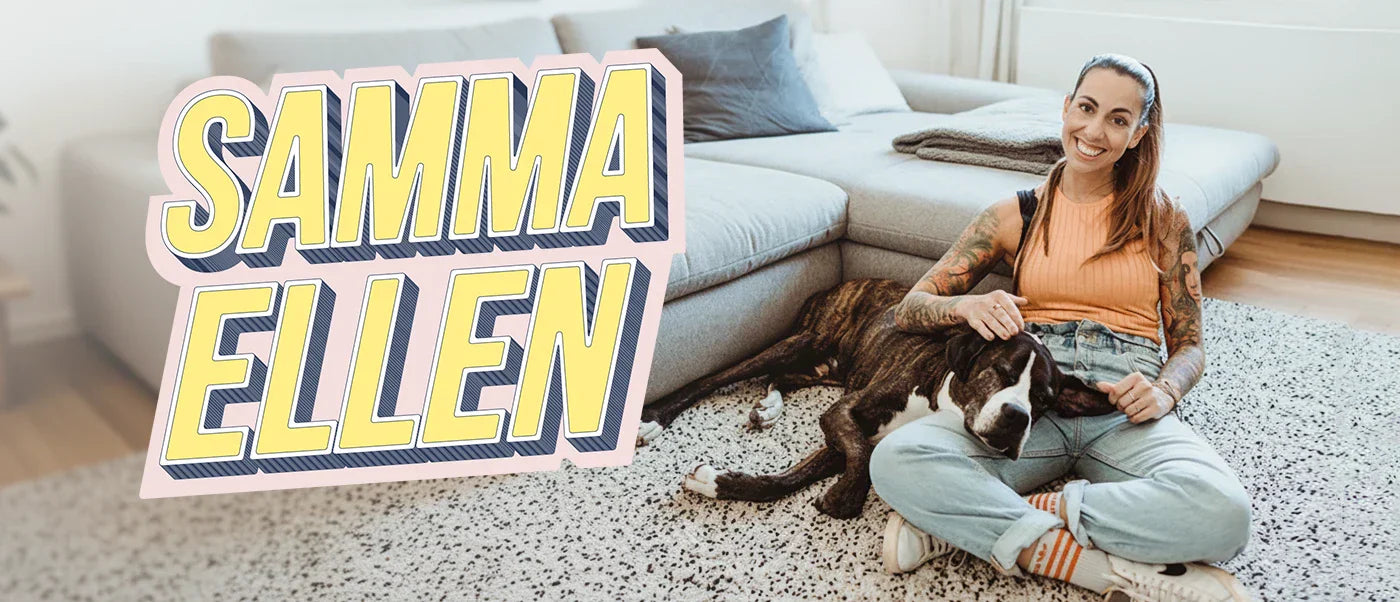
For many dogs, toys are a natural part of everyday life. They motivate, engage, and provide shared activity between human and dog. But sometimes the mood suddenly changes: the dog defends its toy, becomes tense, or reacts aggressively towards other dogs. Then the question quickly arises:Do toys promote aggression? Dog trainer Ellen Marques, owner of the Martin Rütter Dog School in Cologne and known from TV shows such as "Der Hundeprofi" (The Dog Professional) and "Die Unvermittelbaren" (The Unadoptables), explains why the answer is more nuanced than many think. The toy is not the problem "It's not the toy itself that's the problem, but how it's handled," explains Ellen Marques. This means:Toys don't automatically trigger aggression. However, they can intensify or reveal existing issues. Especially when dogs: defend resources feel competition are insecure want to exert control or have had bad experiences In such situations, the toy suddenly becomes emotionally charged. When a toy becomes a resource For some dogs, toys have an enormously high value. Balls, tug toys, or certain favorite objects, in particular, can become heavily defended resources. This is often evident in dogs who: carry toys away or "secure" them keep other dogs at a distance tense up as soon as someone approaches growl or block want to control people or dogs Many dog owners initially misinterpret this behavior. Because it often appears outwardly as:"The dog just loves its toy very much." However, there is often a deeper issue behind it. Why dogs defend resources Resource guarding is, first and foremost, normal behavior. From a dog's perspective, a valuable object can be something that needs to be protected. However, it becomes problematic when the dog has learned that aggressive or controlling behavior is successful. "Some dogs have learned that they can create space for themselves through this behavior," explains Ellen Marques. If other dogs or people have retreated in the past, this behavior can intensify. The dog experiences:"That works." And it is precisely this that often leads to a stable pattern in the long term. Aggression is often just the visible surface One point is particularly important to Ellen Marques:Aggressive behavior around toys is often not the actual problem, but a symptom. Different causes can lie behind it: insecurity lack of frustration tolerance lack of orientation stress competitive behavior bad experiences This means:Anyone who only tries to take away the toy or avoid conflicts usually does not resolve the cause. Why training is so important Instead of completely avoiding problematic situations, Ellen Marques recommends a structured training approach. Because precisely these resource-related issues can be meaningfully integrated into training. This involves, among other things: making the value of resources controllable building calm in such situations creating alternatives to aggressive behavior strengthening human orientation "You should gradually incorporate such topics into training," explains Ellen Marques. It is important not to overwhelm the dog and to build up situations in a controlled manner. Using toys consciously instead of avoiding them Many dog owners react out of insecurity by completely omitting toys - especially during dog encounters. This can prevent conflicts in the short term, but often does not solve the actual problem. A conscious approach is much more sensible: clear rules controlled play situations appropriate training steps structured encounters In this way, toys can even help to work on precisely these issues in the long term. Conclusion: Toys don't make dogs aggressive - but often show existing issues Toys alone do not create aggression. However, they can reveal how a dog deals with resources, competition, and social pressure. The most important insight from Ellen Marques' practice is therefore:Don't fight the toy, but understand why the dog reacts this way. Because behind resource guarding there is often much more than "possessiveness". And that's where meaningful training begins:with understanding the cause - not just reacting to the behavior.
Learn more
Why Dogs Escalate During Play – And What's Really Behind It
Many dog owners know this situation:It was supposed to be just a short, fun play session. But suddenly, the dog becomes more and more frantic, jumping, nipping, wildly overexcited, and then can barely calm down again. Soon, the impression arises that the dog is "too wild," "hyperactive," or simply uncontrollable. However, this often falls short of the mark. Dog trainer Ellen Marques, owner of the Martin Rütter Dog School in Cologne and known from TV formats like "Der Hundeprofi" (The Dog Pro) and "Die Unvermittelbaren" (The Unadoptables), explains that something entirely different usually lies behind this behavior: a lack of self-regulation. Playing activates more than just fun "Play activates not only the fun systems but also hunting, control, and conflict systems," explains Ellen Marques. This means:Many processes occur simultaneously in the dog's body and nervous system during play. Especially dynamic games – such as running, tugging, or wild movements – often stimulate the same systems that become active during hunting behavior or strong arousal. Especially spirited and agile dogs react very intensely to this. And that's precisely why play in some dogs quickly tips from "fun" into over-arousal. When self-regulation is missing According to Ellen Marques, the crucial point is the ability to self-regulate. That is, the dog's ability to: calm down again despite excitement endure impulses regulate frustration switch between activity and rest However, many dogs have never truly learned this. This doesn't mean they are "difficult." Often, they simply lack the experience and guidance to deal with high arousal constructively. "Many dogs need help with self-regulation," says Ellen Marques. Why dynamic dogs quickly get hyped up Dogs with a lot of energy and high motivation, in particular, tend to become extremely revved up during play. And it is precisely these dogs that often make shared play particularly enjoyable. "It's great fun to play dynamically – especially with agile dogs," explains Ellen Marques. However, the problem arises when the dynamic continuously increases, and the dog never learns to consciously calm down again. Because without this balance, the dog remains constantly "under tension" emotionally. Calmness can be trained The good news: self-regulation can be trained. Not by avoiding play entirely – but by structuring it meaningfully. According to Ellen Marques, this primarily includes: rest periods during play controlled sequences conscious waiting impulse control clear start and end signals The goal is not that the dog is never excited. Excitement is definitely part of play. Rather, it is important that the dog learns to deal with this arousal. Why toys can help The use of toys in training is particularly exciting. Because toys can not only activate but also be used specifically to build control and calmness. "Toys can be a great help in training," explains Ellen Marques. For example, by: the dog having to wait before playing short rest periods being built in play being started and ended in a controlled manner impulse control becoming part of the game In this way, the dog gradually learns that high motivation does not automatically mean a loss of control. The fault is often not with the dog Many dog owners initially think their dog is "too wild" or "overexcited." In reality, a structured approach to play is often simply missing. If play always means maximum action, the dog learns exactly that: to get hyped up faster and faster. If, on the other hand, the balance between activity and regulation is missing, a dog often develops in the long term that can hardly switch off during play. Conclusion: Play can be wild – but not boundless Play is important for dogs. It strengthens the bond, provides motivation, and brings great joy to many dogs. But play also needs structure. Because especially with dynamic dogs, "just playing" is often not enough. The most important insight from Ellen Marques' practice is therefore:The excitement itself is not the problem – but the missing path back to calmness. That's precisely why impulse control, clear procedures, and conscious regulation are just as much a part of play as fun and action. Because in the end, good play is not the loudest or wildest – but the one where the dog can relax again.
Learn more
What playtime behavior can reveal about your dog and your relationship
For many dog owners, playing is primarily one thing: an activity. The ball is thrown, the dog runs off, brings it back, and both have fun. But if you look closely, you quickly realize: much more happens during play. Because play behavior can reveal an astonishing amount about how a dog handles frustration, how impulsive it is, how secure its bond with its human seems – and how well the two actually communicate with each other. Dog trainer Ellen Marques, owner of the Martin Rütter Dog School Cologne and known from TV formats like "Der Hundeprofi" (The Dog Pro) and "Die Unvermittelbaren" (The Unplaceables), regularly observes exactly this during training. Play often reveals more than everyday life "Many things become clearer during play than in normal everyday life," explains Ellen Marques. This is mainly because play activates emotional systems. The dog is more motivated, more excited, and reacts more spontaneously. This is precisely what makes behavioral patterns visible that often remain hidden in calm everyday life. Topics that become particularly noticeable include: Impulse control Frustration tolerance Stress processing Attachment behavior Communication between human and dog While some dogs remain calm and responsive even during play, others quickly lose control or have difficulty dealing with small moments of frustration. Why retrieving is much more than "fetching the ball" A good example of this, according to Ellen Marques, is classic retrieving training. At first glance, it seems simple:The human throws something, the dog brings it back. But in reality, an incredible amount happens between dog and owner. "Retrieving is much more than just fetching and bringing," says Ellen Marques. The dog's impulsive reaction is often apparent right from the start. However, it gets even more exciting on the way back. Does the dog come back as motivated as it set off?Or does it suddenly lose interest along the way? Small signals with great significance Details, in particular, are often very insightful during play. Some dogs run an extra round on the way back, suddenly sniff intensely, or demonstratively mark. Others bring the toy back but don't really want to give it up. For Ellen Marques, these are not "funny quirks" but valuable indicators of the dynamic between human and dog. Because different issues can lie behind them: lack of orientation conflicts when giving up insecurity lack of frustration tolerance or simply different expectations in play The question of how closely a dog approaches its human head-on or how readily it cooperates can also say a lot about the relationship. Play makes relationships visible The social component is particularly exciting for Ellen Marques. Because play often very clearly shows how well human and dog actually harmonize with each other. Is there clear communication?Do both enjoy the game?Do both understand the rules?Or does subtle pressure or conflict arise? "You can learn an incredible amount about relationships through play," she explains. This does not mean that every little behavior is immediately problematic. But play can help to make patterns visible that are often overlooked in everyday life. Frustration, control, and impulse control Emotional self-regulation also quickly becomes visible during play. Can the dog wait?Can it hold back?Does it remain responsive? Or does the mood quickly tip into overwhelm or stress? Dogs with low impulse control, in particular, tend to become highly agitated during play. Others react sensitively to small moments of frustration, for example, if the ball is not thrown immediately or the game is briefly interrupted. These situations also offer a great training opportunity. Because play is ideal for training precisely these skills in a controlled manner. Why observation is so valuable Many dog owners focus primarily on whether the dog is having fun during play. However, Ellen Marques recommends observing much more consciously. Because these situations often provide important clues: How does the dog react to boundaries? How cooperative is it really? How quickly does it become stressed? How strongly does it orient itself towards its human? Whoever recognizes this not only understands their dog better but often also their own role in living together. Conclusion: Play is more than just an activity Playing often seems easy and uncomplicated – in reality, however, there is an astonishing amount of information in it. For dog trainer Ellen Marques, play is therefore far more than just pure exercise or activity. It is a way to make relationships, communication, and emotional processes visible. Or in other words:Play often reveals very honestly how dog and human really function together. And that's precisely why it's worth not just seeing the ball fly – but also what happens between throws.
Learn more
Why your dog doesn't want to play – and what the real reasons could be
Many dog owners are familiar with the situation: You're ready with a toy, trying to motivate your dog – but they show little to no interest. Quickly, the impression arises: "My dog just doesn't like to play." However, in most cases, it's not that simple. Dog trainer Ellen Marques, owner of the Martin Rütter Dog School Cologne and known from TV shows like "Der Hundeprofi" and "Die Unvermittelbaren," rarely sees dogs in her practice who fundamentally lack an enjoyment for play. Instead, something else is often behind it. Motivation is individual "Motivation is individual – just like with us humans," explains Ellen Marques. Not every dog reacts the same way to the same stimuli. While some dogs immediately jump at toys, others are more: food-motivated socially oriented territorially influenced This means: toys don't automatically appeal to every dog equally. So, a dog who shows little interest in toys isn't automatically "unmotivated" – but possibly just motivated differently. When the mind is too full According to Ellen Marques, a crucial point is the dog's mental workload. Many dogs are so preoccupied with stimuli and tasks in everyday life that there's simply no room left for play. "Often, dogs are far too busy with other things," says the trainer. These include, for example: constant observation of surroundings controlling behavior in the house or garden high attention to noises or movements insecurity or internal tension In such states, the nervous system is already overloaded – play is then not perceived as attractive. When everyday issues block play Ellen Marques particularly often observes that dogs are preoccupied with certain "tasks" in everyday life that demand a lot from them. A classic example is the theme of control or guarding. "If the dog is constantly busy guarding the house, garden, or people, there's little room for play," she explains. This means: The dog is not relaxed enough to engage in play. Here it becomes clear that a lack of enjoyment for play is often a symptom – and not the actual problem. Structure as the key The solution therefore rarely lies in "better toys," but rather in an adapted daily routine. Ellen Marques emphasizes the importance of: clear structure orientation for the dog reduction of stress factors meaningful daily routine Only when the dog feels secure and clearly guided can they truly engage in play. Play often only emerges with the right foundation An important change in perspective for many dog owners: Play is not an isolated behavior that you can simply "switch on." It often only emerges when the general conditions are right. "Most dogs actually really want to play," says Ellen Marques. But this desire only shows itself when: the dog is mentally available there is no continuous overstimulation the daily routine is coherently structured Conclusion: No play is often an indicator If a dog doesn't want to play, it's worth taking a closer look. In the rarest cases is it because the dog fundamentally lacks an enjoyment for play. Much more often, it's: different motivations an overwhelming daily routine a lack of structure or unresolved issues in the background The most important insight from Ellen Marques' practice is therefore:Don't focus on the play – but on the overall picture. When the foundation is right, the joy of play often comes all by itself. And that's exactly when a seemingly "uninterested" dog suddenly becomes an enthusiastic playmate.
Learn more
When Playing Becomes Stressful: Why Some Dogs Go Completely Overboard
For many dog owners, playing is a natural part of everyday life. It should be fun, provide mental and physical stimulation, and strengthen the bond. But what happens when the exact opposite occurs? If the dog gets increasingly over-excited during play, hardly responds, and struggles to calm down afterwards, it's worth taking a closer look. Because not every play behavior is automatically healthy or beneficial. Dog trainer Ellen Marques, owner of the Martin Rütter dog school in Cologne and known from TV formats such as "Der Hundeprofi" (The Dog Professional) and "Die Unvermittelbaren" (The Unadoptables), experiences such cases repeatedly in her daily work. When play is no longer relaxing "If a dog gets highly excited during play or struggles to stop, play often activates stress rather than the actual enjoyment systems," explains Ellen Marques. Many dog owners initially interpret wild, intense behavior as joy. However, high activity does not automatically mean that the dog is in a healthy emotional state. On the contrary: Over-excited behavior can be an indication that the dog is highly tense internally. Typical signs of overstimulation during play Whether a dog is overstimulated during play is often quite clear from its behavior. The most common signs include: Nipping or biting hands or clothing Jumping up at people Lack of responsiveness Sudden acting out or displacement behavior Difficulty ending play Lack of calmness after activity "Some dogs get so excited that they nip, bite, or jump up at people," describes Ellen Marques. At the latest then, the play behavior should be reconsidered. Why some dogs "escalate" during play Not every dog reacts the same way to play stimuli. Especially dogs with high arousal levels or low impulse control tend to "rev up" very quickly. Several factors play a role in this: Genetic predisposition Previous learning experiences Lack of structure in play Consistently over-intense play offerings If a dog repeatedly enters a state of maximum excitement, it primarily learns one thing: to react faster and more intensely. The actual goal of play – positive interaction and meaningful mental and physical stimulation – recedes into the background. Using play as a training tool The good news is: this behavior can be deliberately influenced. "You can use toys very effectively to build impulse control," explains Ellen Marques. Instead of letting play simply happen, it is consciously structured and controlled. One possible approach is the clear division of activity and control. Ellen Marques describes it this way:A large part of the training consists of waiting, enduring, and control, while only a smaller part actually consists of intense play action. Or, to paraphrase:"70 to 80 percent calm and control – and 20 to 30 percent real play action." This structure helps the dog to better regulate its excitement and not constantly tip into extreme states. Calmer play alternatives as key In addition to classic action with a ball or tug-of-war, it's worth consciously incorporating calmer play variants. These include: Search games Controlled interactions Calm engagement with toys Structured training sequences These forms of engagement challenge the dog in a different way and help it to regulate itself better. "You can also specifically use calm games and search games," says Ellen Marques. Especially for dogs that get over-excited quickly, this is often a crucial factor. Conclusion: Play needs structure Play is important – but not every game is automatically beneficial. If dogs regularly get over-excited during play, struggle to calm down, or show problematic behavior, it's worth taking a closer look. The most important insight from Ellen Marques' practice:Play should not just happen, but be consciously designed. With clear rules, targeted use, and a focus on impulse control, play can once again become what it should be:a positive, bonding, and meaningful activity in everyday life with the dog. Because in the end, it's not about how wild a game is – but how well the dog can handle it.
Learn more
Much more than Fetch: How Useful Dog Toys Really Are in Training
For many dog owners, it's clear: toys are primarily for fetching. Throw a ball, the dog runs, brings it back – done. But this view is far too narrow. Because toys can achieve much more in training than just pure exercise or activity. Used correctly, they become a versatile tool that can strengthen both motivation and the relationship between human and dog. Dog trainer Ellen Marques, owner of the Martin Rütter Dog School Cologne and known from TV shows like "Der Hundeprofi" and "Die Unvermittelbaren," uses toys specifically in a wide variety of training situations. Toys as a Reward in Training One of the most obvious and at the same time most effective uses is the use of toys as a reward. Many dogs are particularly motivated when they know that a short play session awaits them at the end. "Toys offer many possibilities as a reward in training," explains Ellen Marques. Especially for dogs who are less food-motivated or quickly lose interest in treats, toys can be a real alternative. This creates a clear advantage:The reward becomes more active and emotional, which often makes training more dynamic. Strengthening the Relationship through Joint Play An often underestimated aspect is the effect of toys on the relationship between human and dog. Joint play is more than just activity – it is communication. Specifically used games: promote attention strengthen the bond create shared successes "Toys can be wonderfully used for relationship games," says Ellen Marques. It is important that the game is not uncontrolled, but deliberately designed. Controlled Games Instead of Constant Action A central point in training is control over the game. Toys should not simply be for wild romping, but used purposefully. Controlled games mean: the human starts the game the human ends the game intensity and duration are consciously controlled This not only provides more structure but also helps the dog distinguish between activity and rest. Search Games and Brain Teasers Toys are excellently suited for cognitive stimulation. Instead of just being physically active, the dog can also be mentally challenged: searching for toys distinguishing objects solving small tasks This form of activity is often more sustainable than pure exercise, as it challenges the dog on a different level. "Toys are also ideal for search games and brain teasers," explains Ellen Marques. Toys for Calm Regulation A particularly exciting – and for many surprising – area of application is calm regulation. Because toys don't always have to be associated with action. Certain forms of use, such as: chewing licking calm engagement can help the dog reduce stress and regulate itself. Ellen Marques speaks here of "over-chewing and over-licking" – behaviors that can have a calming effect on the nervous system. Especially after exciting situations, toys can be used specifically to bring the dog back to a balanced state. Conclusion: A True Multitalent in Training In dog training, toys are much more than just a means to an end. Used correctly, they can: increase motivation strengthen the bond provide structure offer mental stimulation and even contribute to relaxation Or as Ellen Marques summarizes it:Toys open up "super many possibilities" in training – far beyond traditional fetching. For dog owners, this means:It is worthwhile to broaden your perspective on toys and consciously integrate them into your daily training routine. Because often the greatest added value lies not in the object itself, but in the way we use it together with our dog.
Learn more
Too many toys for your dog? Why less is often more
Many dog owners mean particularly well: several balls, various tug toys, squeaky toys – and ideally, everything freely accessible. After all, the dog should be kept busy and have fun. But that's exactly what can quickly backfire. Because how much toy is actually sensible? And can you even overdo it when playing? Dog trainer Ellen Marques, owner of the Martin Rütter Dog School Cologne and known from TV formats like "Der Hundeprofi" and "Die Unvermittelbaren", observes in her daily work that an oversupply of toys tends to create rather than solve problems. When "too much" suddenly becomes a problem "Of course, you can offer the dog too many toys", explains Ellen Marques. What looks like care to us can quickly lead to sensory overload for dogs. Similar to children, dogs also lose focus when everything is constantly available. Instead of targeted occupation, a state of: inner restlessness lack of orientation superficial occupation instead of genuine utilization The dog has many options – but often doesn't even know what to do with them. Why toys can lose their value Another effect: toys lose their importance. When everything is available at all times, there is no special appeal anymore. The ball that used to be exciting suddenly becomes secondary. "There is often a decline in the value of individual items", says Ellen Marques. This means specifically: less motivation in training less interest in playing together faster boredom The dog becomes somewhat desensitized because there is no longer a difference between "available" and "special." Lack of structure in daily life An often underestimated point is the structure in daily life. If toys are lying around everywhere and the dog has access at all times, a clear line is missing: When do we play?Who starts the game?When is it over? Without this orientation, many dogs take control themselves. This can then manifest itself in behavior that Ellen Marques describes with a twinkle in her eye as: "My house, my car, my toy." The dog decides for itself about the start, duration, and intensity – and that can become problematic in the long run. Less is more: using toys consciously The solution is surprisingly simple – and much more pleasant for many dogs. Ellen Marques recommends using toys purposefully and controllably: Toys are put away the dog does not have permanent access the human decides on the beginning and end of the game This ensures: more clarity more structure more value of the toy And above all: more quality in playing together. Playing together instead of constant entertainment A crucial shift in perspective is to view toys not as an "occupation object," but as a shared experience. When the human initiates the game, it creates: genuine interaction clear communication controlled build-up and release of tension "It's cooler when the human decides when the game starts – and then really makes it a party", Ellen Marques sums it up. These deliberately set play moments are much more fulfilling for many dogs than a constant offering without structure. Conclusion: Dog toys yes – but with a system Toys are neither fundamentally good nor bad. What matters is how we use them. Too many toys can: promote sensory overload reduce the value of individual items and lead to a lack of structure in daily life Used purposefully, however, they can: increase motivation strengthen the bond and provide high-quality shared experiences Or in other words:It's not the quantity that makes the difference, but conscious handling. For dog owners, this means:Fewer toys – but clear rules, conscious use, and genuine shared play moments. Because ultimately, that is where the greatest added value for the dog lies.
Learn more
Do toys really make dogs happy?
Balls, tug ropes, squeaky toys – the selection of dog toys is huge. For many dog owners, they are an integral part of everyday life with a dog. But one exciting question remains: Do toys really make dogs happy? The answer is less clear-cut than many people think. Because toys alone are not automatically the key to a happy dog. Dog trainer Ellen Marques, owner of the Martin Rütter Dog School in Cologne and known from TV shows like "Der Hundeprofi" (The Dog Professional) or "Die Unvermittelbaren" (The Unadoptables), explains from her training experience why the correct use of toys is paramount. Toys alone do not make a happy dog Many people automatically associate toys with joy – after all, children love their toys too. But dogs function differently. "Toys don't automatically make dogs happy", explains Ellen Marques. What is crucial, she says, is how and in what context the toy is used. For dogs, it's not the object itself that is central, but rather the interaction and the emotional experience associated with it. A ball that just lies around the house has little meaning for many dogs. However, if the same ball is used specifically in training or in shared play, it can become a strong motivator. When toys can trigger positive emotions in dogs Used correctly, toys can have an astonishingly great effect. "Toys can trigger a lot of positive emotions", says Ellen Marques. Especially in training or during shared play moments, they can help to: build motivation create positive learning moments strengthen the bond between human and dog channel excess energy productively Many dogs therefore do not experience toys as an object, but as part of a shared experience with their human. Play thus becomes a social activity – and that is precisely what makes it so valuable for many dogs. The decisive factor: Does it suit the dog? Whether toys are useful always depends on the individual dog.Ellen Marques emphasizes that various factors play a role: the dog's temperament its motivation its current stress level the relationship between dog and owner A very easily excitable dog may react completely differently to intensive ball play than a calm, balanced dog. "Toys should always suit the dog and the situation", explains the trainer. What is a great motivator for one dog can quickly become too much for another. When toys can trigger frustration or over-excitement As positive as toys can be – if used incorrectly, they can also have undesirable effects. Ellen Marques points out that some play situations can trigger frustration or over-excitement. This can happen, for example, if: a dog is constantly allowed to chase the ball play is ended abruptly the dog never really "wins" the toy the pace of play is consistently very high In such situations, joy can quickly turn into stress or overwhelm. Especially very enthusiastic play-dogs can easily get into a kind of "permanent action mode", from which they find it difficult to calm down again. Toys are a tool – not an end in themselves From a trainer's perspective, Ellen Marques therefore primarily sees toys as a tool in a dog's everyday life. They can help to: make training more motivating create shared activity productively release energy But conscious handling of them always remains crucial. Toys should not simply be used indiscriminately, but purposefully and appropriately for the dog. Then they can be a real enrichment in everyday life. Conclusion: Toys can make you happy – but only if used correctly The question of whether toys make dogs happy cannot be answered with a blanket statement. However, it is clear:Toys alone are no guarantee of happiness. Used correctly, however, they can trigger many positive emotions, encourage motivation, and strengthen the bond between human and dog. Or as Ellen Marques summarizes it:"Toys can be incredibly valuable – if they match the dog's motivation, stress level, and the relationship between dog and human." For dog owners, this means one thing above all:It is not the toy itself that determines success – but the way we use it together with our dog. And that is often the decisive difference between a short play moment and a truly enriching shared activity.
Learn more
Do Dogs Really Need Toys? An Honest Assessment from a Trainer's Perspective
For many dog owners, toys are an integral part of everyday life. But on closer inspection, a legitimate question arises: Do dogs actually need them?
Learn more