

Many dog owners know this situation:
It was supposed to be just a short, fun play session. But suddenly, the dog becomes more and more frantic, jumping, nipping, wildly overexcited, and then can barely calm down again.
Soon, the impression arises that the dog is "too wild," "hyperactive," or simply uncontrollable.
However, this often falls short of the mark.
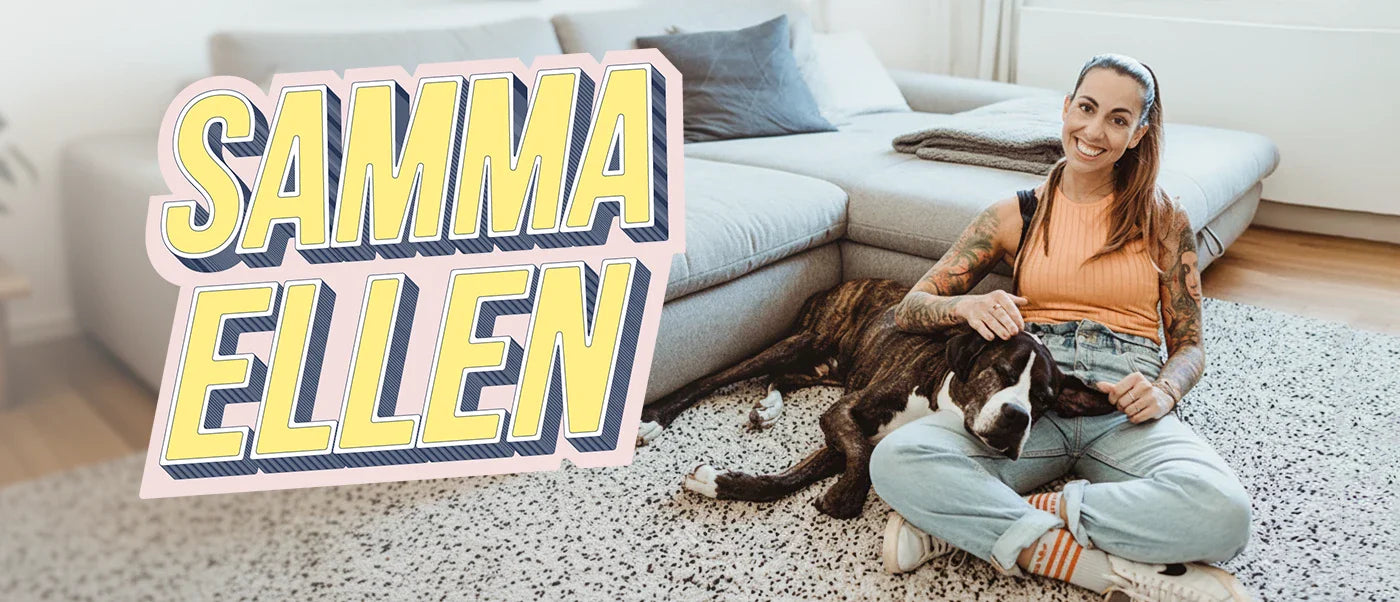
Dog trainer Ellen Marques, owner of the Martin Rütter Dog School in Cologne and known from TV formats like "Der Hundeprofi" (The Dog Pro) and "Die Unvermittelbaren" (The Unadoptables), explains that something entirely different usually lies behind this behavior: a lack of self-regulation.
Playing activates more than just fun
"Play activates not only the fun systems but also hunting, control, and conflict systems," explains Ellen Marques.
This means:
Many processes occur simultaneously in the dog's body and nervous system during play.
Especially dynamic games – such as running, tugging, or wild movements – often stimulate the same systems that become active during hunting behavior or strong arousal.
Especially spirited and agile dogs react very intensely to this.
And that's precisely why play in some dogs quickly tips from "fun" into over-arousal.
When self-regulation is missing
According to Ellen Marques, the crucial point is the ability to self-regulate.
That is, the dog's ability to:
- calm down again despite excitement
- endure impulses
- regulate frustration
- switch between activity and rest
However, many dogs have never truly learned this.
This doesn't mean they are "difficult." Often, they simply lack the experience and guidance to deal with high arousal constructively.
"Many dogs need help with self-regulation," says Ellen Marques.
Why dynamic dogs quickly get hyped up
Dogs with a lot of energy and high motivation, in particular, tend to become extremely revved up during play.
And it is precisely these dogs that often make shared play particularly enjoyable.
"It's great fun to play dynamically – especially with agile dogs," explains Ellen Marques.
However, the problem arises when the dynamic continuously increases, and the dog never learns to consciously calm down again.
Because without this balance, the dog remains constantly "under tension" emotionally.
Calmness can be trained
The good news: self-regulation can be trained.
Not by avoiding play entirely – but by structuring it meaningfully.
According to Ellen Marques, this primarily includes:
- rest periods during play
- controlled sequences
- conscious waiting
- impulse control
- clear start and end signals
The goal is not that the dog is never excited. Excitement is definitely part of play.
Rather, it is important that the dog learns to deal with this arousal.
Why toys can help
The use of toys in training is particularly exciting.
Because toys can not only activate but also be used specifically to build control and calmness.
"Toys can be a great help in training," explains Ellen Marques.
For example, by:
- the dog having to wait before playing
- short rest periods being built in
- play being started and ended in a controlled manner
- impulse control becoming part of the game
In this way, the dog gradually learns that high motivation does not automatically mean a loss of control.
The fault is often not with the dog
Many dog owners initially think their dog is "too wild" or "overexcited."
In reality, a structured approach to play is often simply missing.
If play always means maximum action, the dog learns exactly that: to get hyped up faster and faster.
If, on the other hand, the balance between activity and regulation is missing, a dog often develops in the long term that can hardly switch off during play.
Conclusion: Play can be wild – but not boundless
Play is important for dogs. It strengthens the bond, provides motivation, and brings great joy to many dogs.
But play also needs structure.
Because especially with dynamic dogs, "just playing" is often not enough.
The most important insight from Ellen Marques' practice is therefore:
The excitement itself is not the problem – but the missing path back to calmness.
That's precisely why impulse control, clear procedures, and conscious regulation are just as much a part of play as fun and action.
Because in the end, good play is not the loudest or wildest – but the one where the dog can relax again.


