

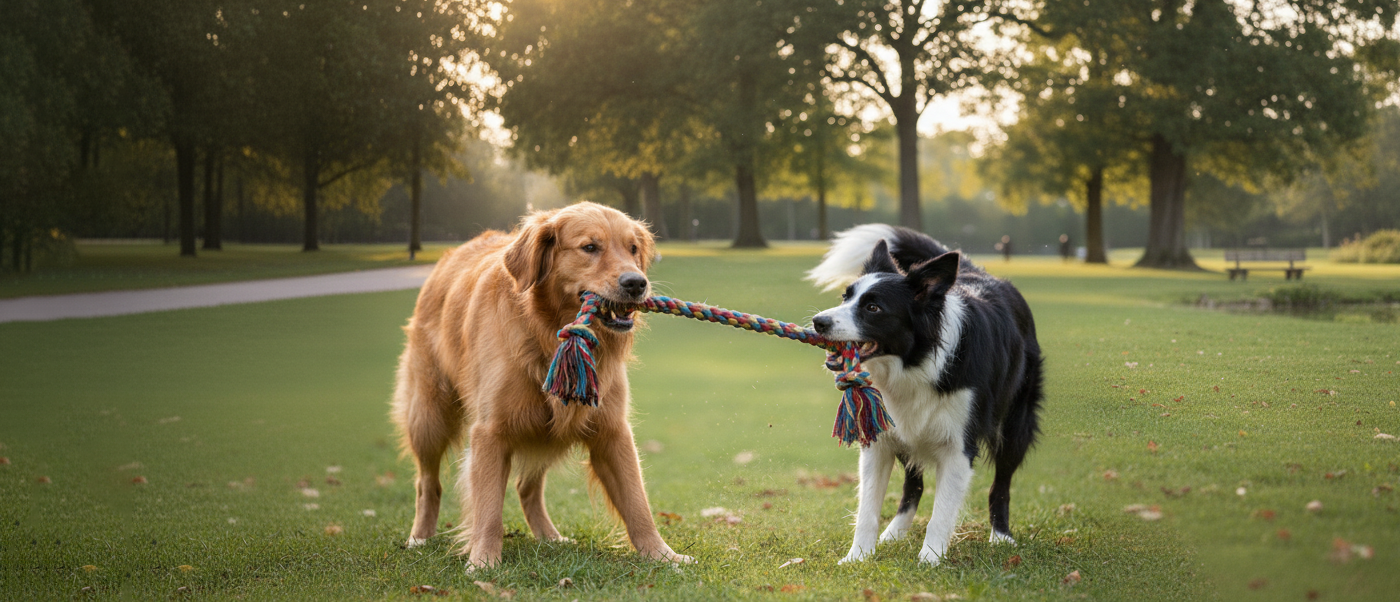
Did you know that dogs sleep between 12 and 16 hours a day? Sounds relaxed – and it is. Nevertheless, dogs need regular stimulation. An under-stimulated dog who gets bored will quickly find their own "projects": a torn-apart sofa cushion, for example.
Toys can help channel this energy into meaningful activities – they keep dogs occupied, promote development, and calm them down. But which toys are truly useful? And what should you look for to ensure it's not only fun for your dog but also safe?
In this text, we'll look at different types of dog toys, what to consider when choosing them, and which mistakes to avoid so that playtime remains fun.
Why dog toys are more than just a pastime
Toys are not a bonus, but often a necessary part of everyday life. They fulfill several important functions:
-
Encourage exercise: Many dogs don't get enough exercise in their daily lives. Toys like balls or tug ropes can help change that – without having to constantly rely on the next walk.
-
Mental stimulation: It's not just the body that wants to work – the brain does too. Puzzle toys or scent games challenge your dog mentally.
-
Stress relief: Chewing helps many dogs calm down. A good chew toy can prevent this impulse from being transferred to shoes or table legs.
-
Dental care: Some chew toys clean teeth or massage gums while chewing – a small added benefit that doesn't hurt.
-
Strengthen bonding: Playing together is also spending time together. Especially for young or insecure dogs, this can help build trust.
What types of dog toys are there?
The selection is vast – and not everything is suitable for every dog. Here's an overview:
-
Chew toys
For dogs who love to gnaw. Materials like natural rubber or sturdy felt are more sensible than cheap plastic. Chew toys not only help with stress relief but can also support dental health – especially for puppies or during the adjustment to a new home. -
Fetch toys
Balls, frisbees, or dummies appeal to the urge to move and hunting instinct of many dogs. Important: Not every dog should wildly chase after everything – especially with young dogs with soft bones, caution is advised. -
Interactive toys
Treat-dispensing balls, puzzles, or sliding boxes – such toys promote problem-solving skills and concentration. They are ideal for building self-confidence and providing mental stimulation for the dog. Older or physically limited dogs also benefit from them. -
Plush toys
They are not "toys" in the classic sense, but still important for many dogs. Some carry their plush toy everywhere, others use it as a pillow or "prey." Look for sturdy seams and safe workmanship. -
Rope toys
For tug-of-war with you or with other dogs. Well suited for dogs who like to be active, as long as you play together and the game remains under control.
Tip: Every dog is different. Everyone has different predispositions, experiences, and character traits. Talk to your trainer about what's right for your dog – we don't want a hunting dog to want to hunt even more ;)
Which toy suits which dog?
-
Puppies
Soft puppy toys that still offer a little resistance are ideal. It's important that it doesn't splinter or is too hard – jaws and teeth are still sensitive. Wild throwing games are often too much at that age, as bones and joints are not yet fully developed. Very active dogs
Powerhouses need robust dog toys – preferably something that can be thrown, pulled, or chewed. Still, make sure it doesn't get too hectic – a lot of exercise doesn't replace rest periods.Older dogs
Things are often calmer here. Interactive toys or softer chew toys offer variety without being overwhelming. -
Small dogs
The size of the toy must match the size of the dog. A chihuahua won't get much out of a standard tennis ball – and a large dog can quickly swallow a mini toy. -
Think beyond breed
Of course, some breeds have certain preferences – but that doesn't mean a retriever only wants to fetch or a pug has no interest in mental work. Best approach: Try it out, observe, adapt.
How do I identify safe and harmless dog toys?
Many dog toys look good at first glance – but some contain harmful substances or are poorly made. Here's what to look for:
-
No questionable substances: BPA-free, no plasticizers, no strong-smelling paints or glues – this should be standard.
-
Prefer natural materials: Felt, rubber, hemp and cotton, or leather are often safer and ecologically more sensible than synthetic plastics like polyester.
-
Sturdy construction: Seams that don't immediately come apart, or toys made from one piece, last longer – and are safer. Also, pay attention to small parts that can be swallowed and whether the toy might have a squeaker.
-
Certificates can provide guidance: CE or TüV markings are not a must, but an indication that at least certain standards have been met.
Common mistakes when buying toys
-
Bought too small: Small toys for large dogs are risky. In the worst case, the item will be swallowed.
-
"Cheap" instead of good: Cheaply manufactured toys can contain harmful substances or break quickly.
-
Play behavior not considered: Not every dog likes to chew or fetch. Ignoring this often leads to buying the wrong thing.
Durable and sustainable – is that possible?
Yes. You can consciously choose dog toys and make them usable for longer:
-
Clean regularly: Especially food toys should stay clean – ideally after each use.
-
Focus on quality: There are manufacturers who pay attention to durable and pollutant-free materials – e.g., Planet Dog, Moby, Ruffwear, or BUDDY.
-
DIY: Turn an old T-shirt into a tug toy or sew a treat pouch from fabric scraps – sometimes you don't even need a new product.
Briefly answered: Frequent questions about dog toys
-
What's good for strong chewers?
Solid natural rubber or hard-pressed wool – without hollow spaces, preferably in one piece. -
Which materials are safe?
Wool felt, cotton, natural rubber, or leather – as natural as possible and tested for harmful substances. -
What promotes intelligence?
Puzzles and food toys where your dog has to develop strategies. -
What helps with teething?
Soft but chewable materials like felt or softer rubber. -
How do you clean dog toys?
With warm water and a little soap, machine washable only for robust materials like felt. -
Why fetch toys?
Promotes movement and communication – especially if you play along. -
When should I replace toys?
As soon as it's damaged – especially with plush or squeaky toys. -
Are there dental care toys?
Yes, often with grooves or nubs – but they don't replace dental care and dental check-ups at the vet. -
What suits small dogs?
Light, soft, small – mini plush toys, small ropes, or treat balls are ideal. -
Where to buy?
In shops that focus on quality rather than mass-produced goods. Besides BUDDY, e.g., Fräulein Plath or petcrew.de, or your favorite local store.


