

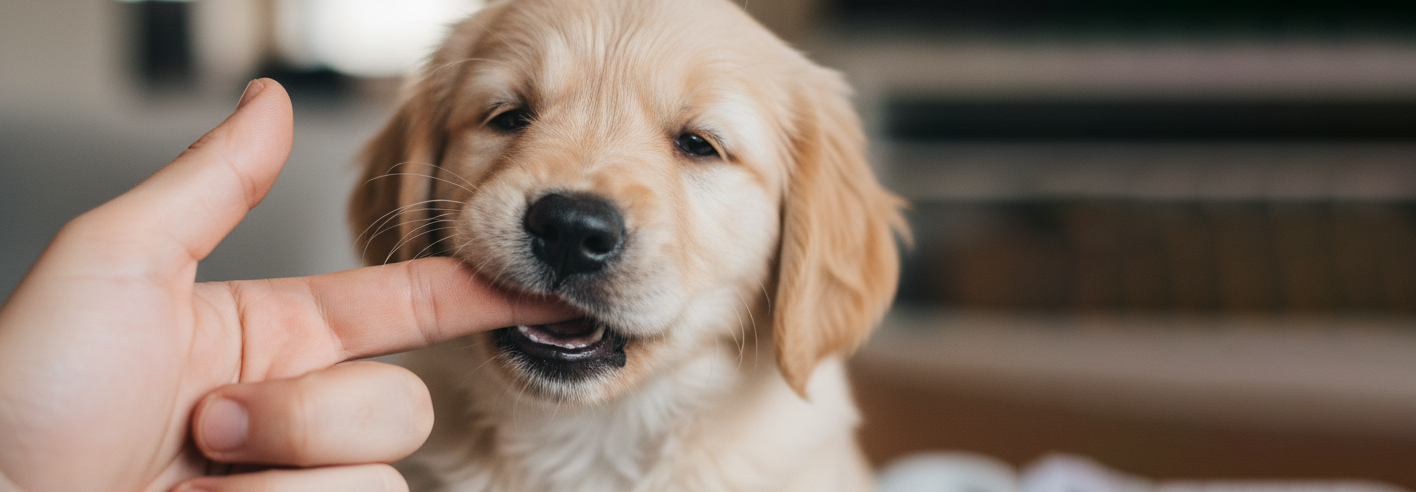
Training Bite Inhibition in Puppies – How Your Puppy Learns Not to Bite
Dogs are loyal companions and an integral part of our daily lives. Especially with puppies, however, an important question arises early on: How hard is a puppy actually allowed to bite? Bite inhibition refers to the ability to control the intensity of the bite – and it is not innate. Learning bite inhibition is one of the most important tasks in the first weeks of life. Particularly between the fourth and about the sixteenth week, puppies learn that biting human hands or body parts is undesirable.
In the following, you will learn why bite inhibition is so important for puppies, how you can playfully teach your puppy bite inhibition, and how to train bite inhibition in everyday life.
Why Puppies Must Learn Bite Inhibition
If a puppy suddenly bites too hard while playing, it can quickly become painful. A single bite may seem harmless, but it often exceeds the personal pain threshold. For your dog to be able to interact safely with people and other dogs later on, he must learn to regulate his biting intensity.
Natural bite inhibition develops through interaction with the mother and littermates. During shared play, nipping, and wrestling, the other puppies immediately show when it's too much. Growling, yelping, or breaking off the game are clear signals. This way, the puppy understands when its teeth have been used too hard and that it needs to be more careful in play.
Tip: This is why many dog trainers advise against squeaky toys. They can even encourage unwanted behavior because they distort the natural signal of the pain threshold. You can find out more in this article...

Teaching Puppies Bite Inhibition: First Steps
Training bite inhibition should be calm, consistent, and playful. The goal is for your puppy to learn to consciously use its teeth and control the intensity of its bite.
1. Immediately Stop Playing
If your puppy bites too hard during play, you should stop the game immediately. Stand up, turn away, or briefly leave the room. This interruption clearly shows the puppy that rough behavior is undesirable. Children, in particular, must learn to remain calm in such moments and not continue playing.
2. Positive Reinforcement for Gentle Play
If your puppy interacts gently with you, you should praise him. This way, he learns that gentle behavior towards people is rewarded. This form of educational feedback sustainably supports the learning process.
3. The Muzzle Grip as a Signal
Some trainers recommend the muzzle grip. This involves briefly and gently gripping the puppy's muzzle and using a clear signal word like "No" or "Taboo." The mother dog also uses this method when puppies become too wild. However, it should only be used under the guidance of a professional, as incorrect application can disrupt trust.
Puppy Bites: Bite Inhibition When Interacting with Children
Special caution is required when dealing with children. Puppies often classify children as "inferior" and react differently in play than with adults. Therefore, you should supervise every game between child and dog.
If a boundary is crossed, intervene calmly. Both dog and child must learn to treat each other with respect. This sustainably promotes bite inhibition towards people.
Exercises for Bite Inhibition in Puppies
For optimal development of bite inhibition, your puppy should gain positive experiences in interacting with people and other dogs early on. Calm touches, controlled play, and clear rules help him to consciously use his teeth.
The actual training of bite inhibition should always be carried out by adults. This way, the puppy understands more quickly which rules apply in the "pack."
Panic Biting Due to Stress or Fear
In stressful situations, a dog may bite out of insecurity. Strangers, unfamiliar environments, or hectic romping can be triggers. Here it is important to give the dog security and to gradually train him for stressful situations.
A calm retreat helps to avoid overwhelming. If panic biting occurs frequently, the support of an experienced dog trainer is advisable.
Bite Inhibition and Pecking Order in the Pack
Even in play with other dogs, boundaries are sometimes clarified by short snaps. This is not about aggression, but about communication within the pack. These are clear signals that dogs can learn and understand.
In living with humans, your dog must also learn how to behave. Clear leadership from you helps him gain security.
Conclusion: Learning Bite Inhibition Pays Off
Learning bite inhibition is a central part of puppy training. With patience, clear rules, and playful training, your puppy learns to use its teeth in a controlled manner. This creates safe interaction with people and other dogs.
If your puppy continues to have problems with biting despite training, do not hesitate to seek professional help. A good dog school can help identify mistakes early on. A well-developed bite inhibition makes your dog a relaxed and reliable companion.


